Creating a teak deck that lasts
June 16th, 2026
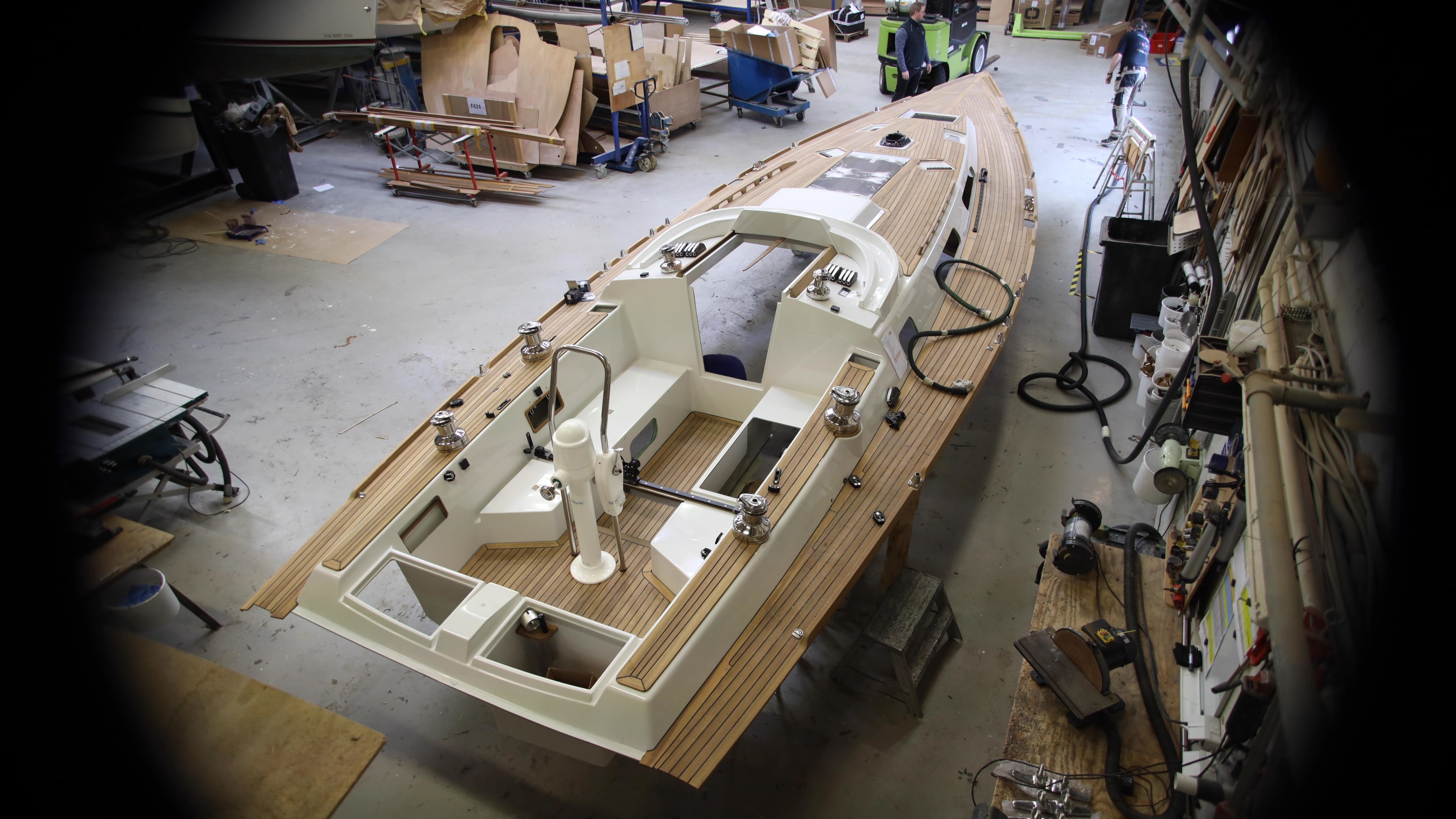
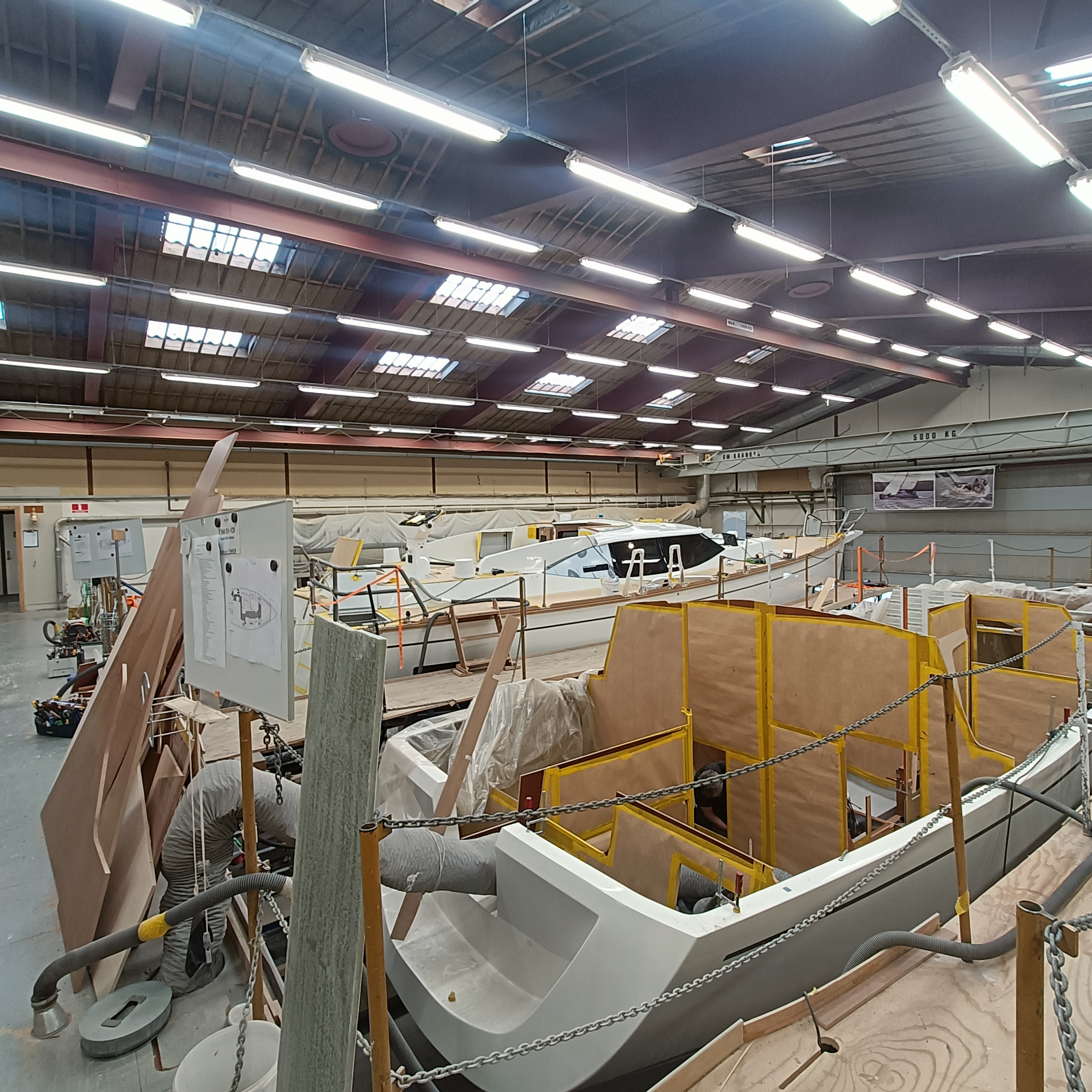
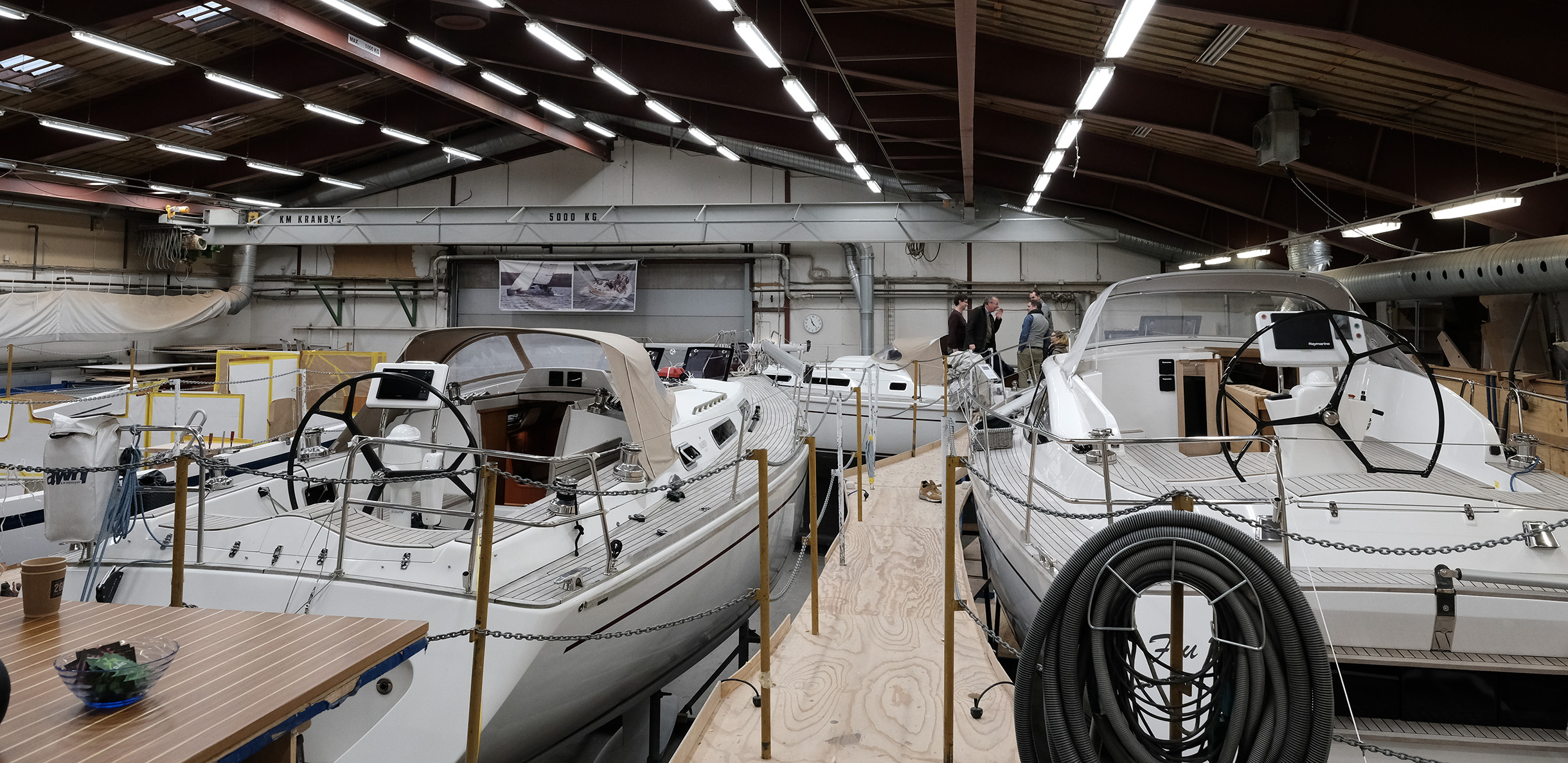
At Faurby, we love our teak decks; they let our craftsmen really show off their talents, and they look stunning, too. As every yacht we build is different – with custom lockers, hatches, and deck fittings – we don’t use templates or glue pre-assembled teak decks to our yachts. Every Teak deck is hand-laid, and every plank is shaped for that yacht by a person.
If you’ve ever been put off buying a used boat with an ageing teak deck with visible screw heads, rest assured, on a Faurby, every plank is individually bonded to the deck, leaving a screwless deck. Because our decks are bonded and the caulking goes down to the deck, it’s possible to sand back the deck until it’s a millimetre or two thick.
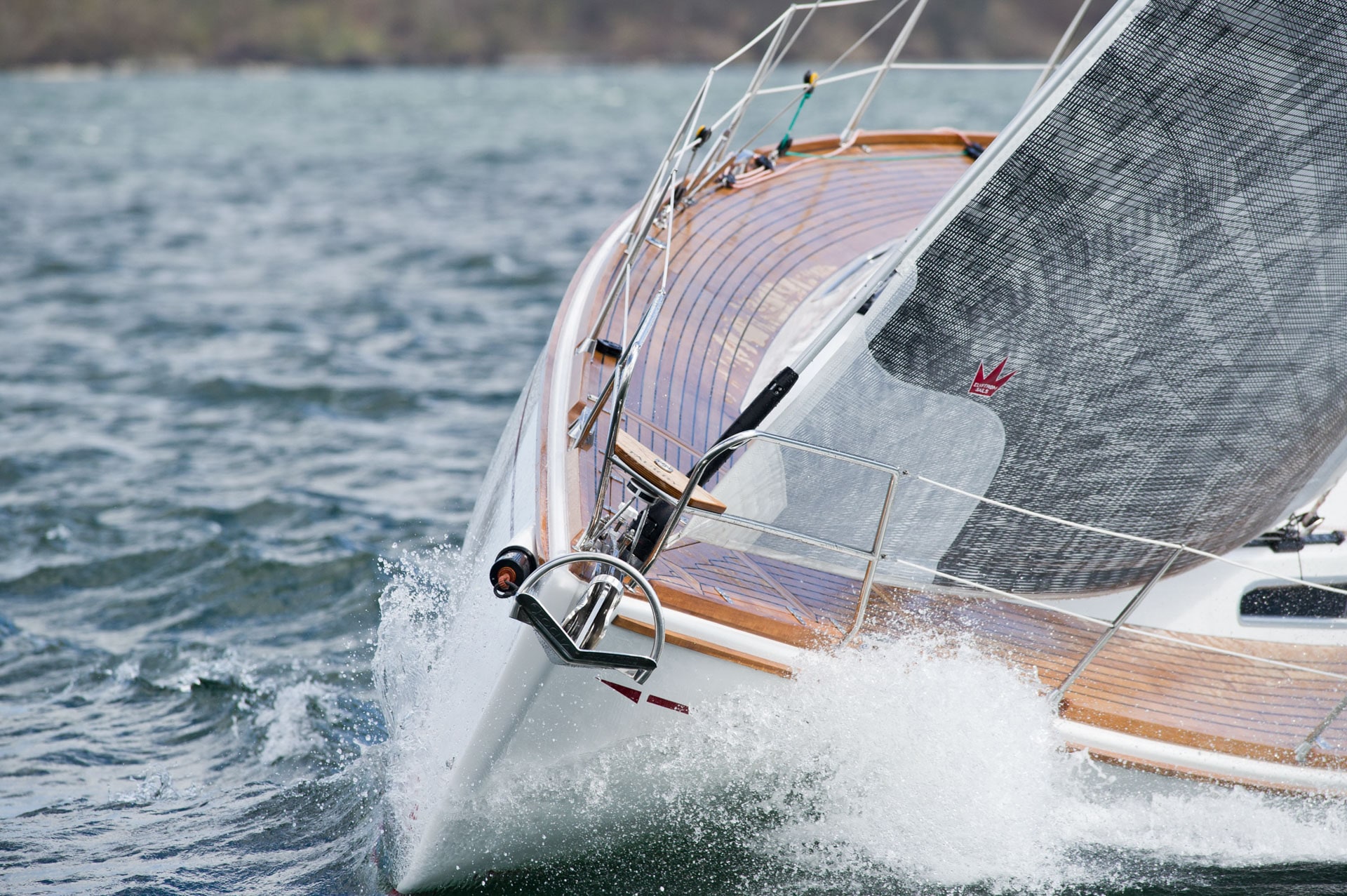
While new teak decks might look the same from afar, it’s worth taking the time to inspect the teak, as not all teak decks are made equally; they vary in the thickness of teak used, how the teak is attached to the deck, and the quality of wood itself.
We also offer many options, including cork and PU (polyurethane), such as Flexiteek, in a variety of planking and caulking colours, as well as our standard textured gelcoat finish.


Teak from Myanmar
Myanmar teak is highly regarded because it’s naturally slow-growing, giving it a fine grain, and it grows tall and straight. However, at the time of writing (2026), there are sanctions against Myanmar after a violent military coup in 2021. While pre-2021 Myanmar stock is available, we have sourced Myanmar teak sustainably grown on South American plantations, all of which is traceable and certified.
How we fit our teak deck
On all our Faurby yachts with below 50ft (14.95m), there will be a thick, solid teak toerail that conceals the hull-to-deck joint. Therefore, before laying the teak deck, we allow space for the toerail outboard on the deck. Beneath the toerail, the deck is bonded and bolted through the toerail, deck, and hull at 10-15 cm (4-6 in) intervals; the bolt heads are hidden beneath wooden plugs. The planks we use are 9mm (3/8 in) thick, and their diameter depends on what the owners would like or on the boat's size.
Our decks are bonded and the caulking goes down to the deck, it’s possible to sand back the deck until it’s a millimetre or two thick.
With the deck marked to accommodate the toerail and covering board, blocks are screwed into the deck to give the first plank a solid point to rest and be clamped against to get the correct curve that matches the shape of the hull. Starting from the bow, the first plank has its forward end shaped, the adhesive is applied, and the plank is clamped and held in place with aluminium T-shaped pieces screwed into the deck. The adhesive is flexible, so any thermal expansion of wood or GRP is accommodated by it and the caulking. The T-pieces act as spacers between the next plank and hold the glued planks securely in place. With the first plank fitted on one side, the process is repeated on the other. By glueing each plank individually, we have complete control over the bond to the deck.


Now that the first planks are bonded on the port and starboard sides of the deck, the process of bonding, clamping, and securing the planks is repeated, with the planks held in place by T-shaped pieces screwed into the GRP deck until the adhesive has set. Then they are removed, and the holes are filled with epoxy. Once the deck planking nears the cockpit coaming, a wider plank is used to accommodate the space between the plank and the raised part of the deck that forms the cockpit coaming and coachroof. As more planks are laid, our shipwrights shape the wider plank and the inboard plank to match, leaving the perfectly even width for the caulking.


Fitting the king plank
The wide planks are fitted from stern to the forward end of the coachroof, as they are met with the planking that’s being fitted from bow to stern. At the forward end, the planks usually meet either the anchor locker or the deck stowage locker, which will be framed in teak. This gives an athwartship plank that the deck planks can butt against, leaving the all-important space for the caulking. There’s a point where the planks on the port side meet the planks on the starboard side, and here another wide plank, the king plank, is used along the centreline. The planks and the king plank are both sculpted to meet, with a caulking line that’s unwavering in thickness between them.


Applying the caulking
Once all the planking is bonded to the deck and all the T-pieces are removed, the screw holes are filled with epoxy. The deck is then lightly sanded to clean it. We then apply a primer in the gaps between the planks to maximise the adhesion between the caulking and the planks. Then caulking is applied in the gaps between the planking. The caulking we use is tough, durable, and sandable; it’s also proven to have excellent resistance to weathering.
With the caulking applied, it’s left to harden before the excess is sanded off. By the time the deck is finished, it is still around 8mm (1/3 in) thick, and you’re left with a durable and beautiful teak deck that will last you many years.


Because no screws are used on the finished deck and the caulking is the full thickness of the planking, it provides many, many years of service and can be sanded to almost its full thickness before it needs replacing. We’re often asked how long teak decks last, and it’s down to the owners and how the decks are looked after. Some owners like the weathered silver look of teak; others will sand and clean it and keep it looking fresh. At the end of the day, it’s your boat and your choice.
After 6-8 years, you may choose to sand 1/2 mm off the teak and caulking to give you the feel of a brand-new teak deck.
When the time comes to have it replaced, we can carry out this work and do another work or upgrades you’d like. After all, we know your boat better than anyone else.
A time-lapse of a teak deck being fitted